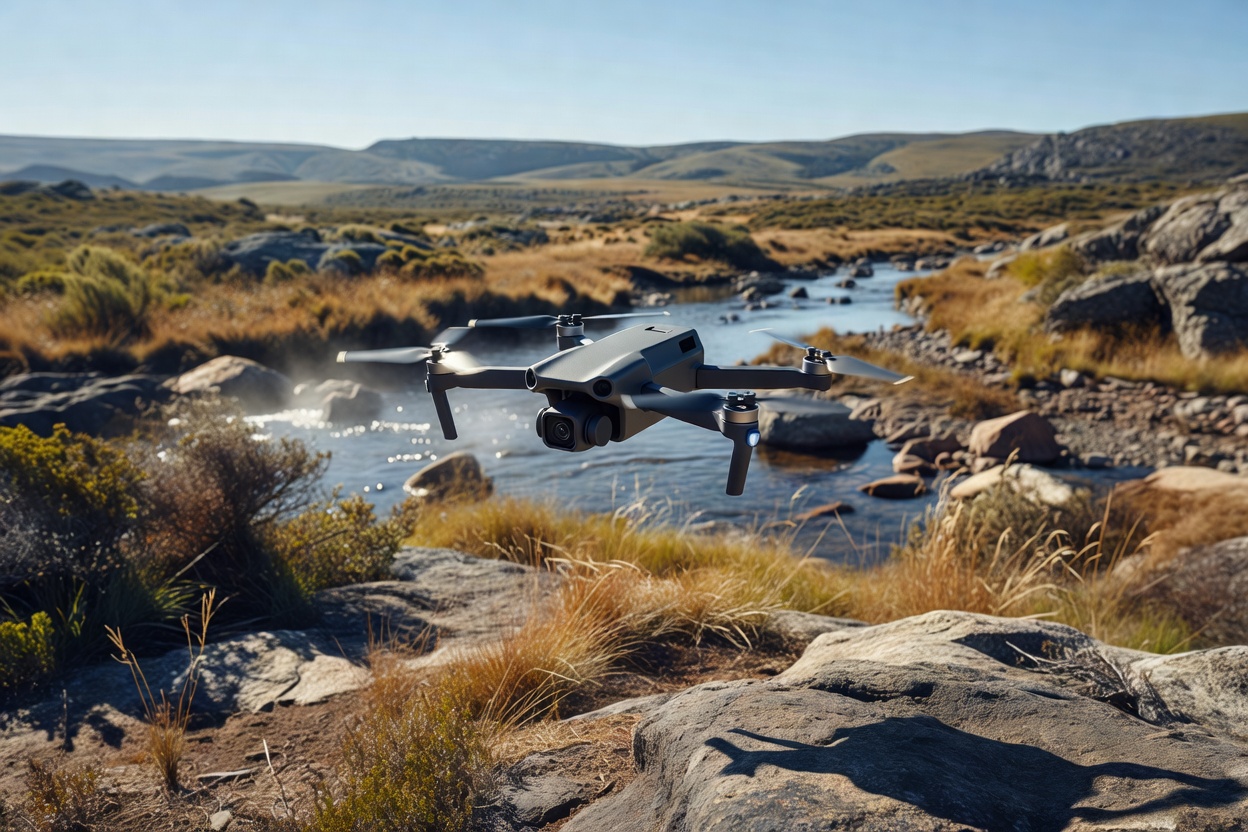
Overview
The DJI Neo is built for people who want great clips without learning to fly an advanced drone. At around 135 g it is among the lightest camera drones from a major brand, and its design removes most of the usual first-flight anxiety: you launch it from your palm, let it track you, and catch it again when you are done.
Why it suits beginners
- Palm takeoff and landing: no need for a flat, clear launch area.
- Built-in propeller guards: softer bumps with people, walls and hands.
- SubjectTrack and QuickShots: the drone follows you and performs automated moves.
- Flexible control: fly with the DJI Fly app over Wi-Fi, voice commands, or add a DJI controller or motion controller for more precise flying and longer range.
- Built-in storage: DJI includes internal storage (22 GB per its specifications), so there is no microSD card to forget.
Camera and video
A 12 MP 1/2-inch-class sensor records 4K video at up to 30 fps with mechanical stabilisation, which is strong for a drone this size. It is well suited to social clips, family outings and travel diaries rather than professional work.
Flight time and limits
DJI quotes up to 18 minutes per battery, so a multi-battery bundle is worth it. Because the Neo is so light, wind is its main enemy; on blustery days it will struggle. Control range depends heavily on whether you use phone Wi-Fi (short range) or a dedicated controller (kilometre-class); check DJI's specifications for exact figures in your region.
Pros
- Truly pocketable at about 135 g
- Palm launch with prop guards
- 4K video with mechanical stabilisation
- Low entry price
- Easy automated shots
Cons
- Shorter flight time than rivals
- Light weight means poor wind tolerance
- Best manual flying needs an extra controller
- Less suited to long-range exploring
Who should buy it
Pick the Neo for easy selfie-style videos, hiking, family trips or as a fun first drone. If you want more range, longer flights and a bigger camera, step up to the DJI Mini 4K.