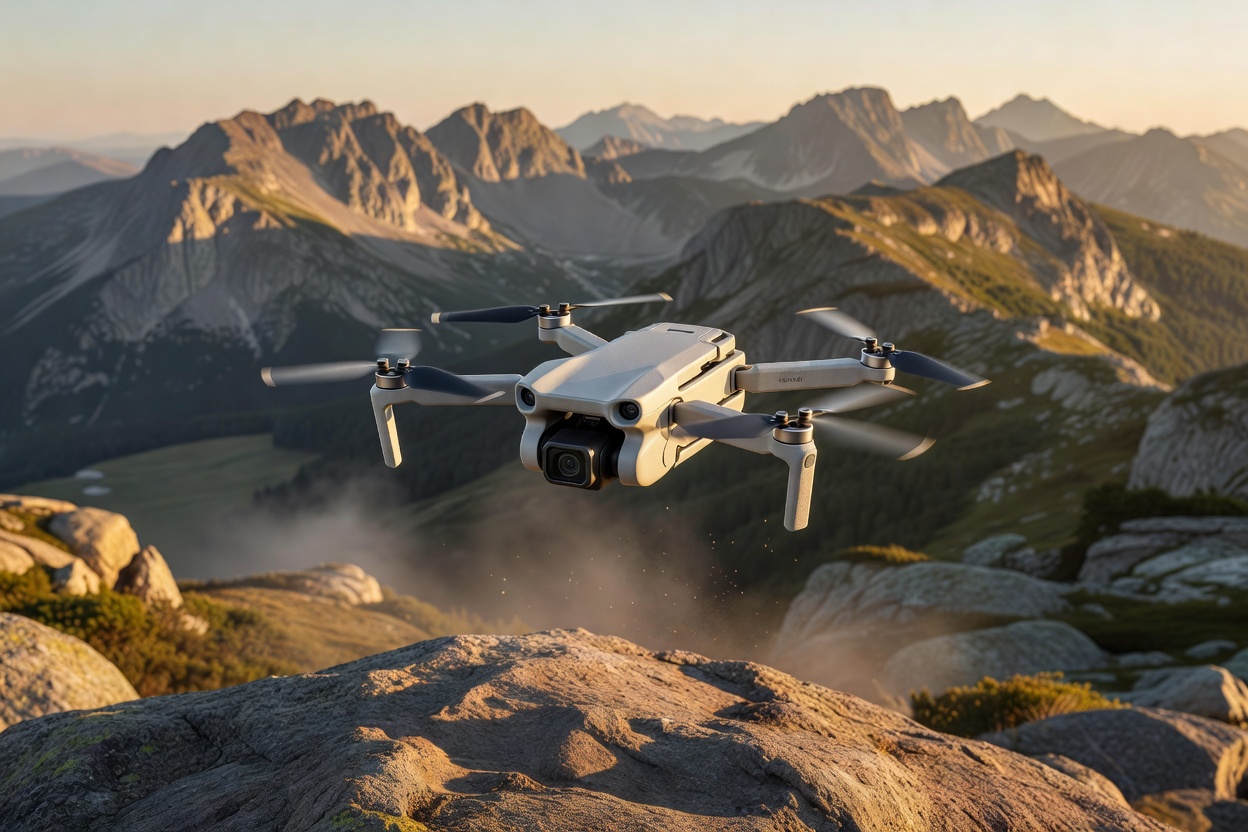
Overview
The DJI Mini 4K is DJI's entry-level folding camera drone. It keeps the features that matter most to new pilots, namely GPS positioning, a 3-axis gimbal, return-to-home and a long-lasting battery, in a body that weighs less than 249 g and folds down to fit in a small bag.
Why it suits beginners
- Stable hover: GPS and downward vision keep the drone steady when you release the sticks, so you have time to think.
- Return-to-home: one tap (or automatic on low battery or signal loss) flies the drone back to its recorded home point.
- Flight modes: Normal, Cine and Sport modes let you start gently and add speed later.
- QuickShots: automated clips such as Dronie, Circle and Rocket make polished videos with almost no skill.
- Simple app: the DJI Fly app guides setup, firmware updates and flying.
Camera and video
A 12 MP 1/2.3-inch sensor records 4K video at up to 30 fps, stabilised by a 3-axis mechanical gimbal. In daylight the footage is clean and sharp for social sharing and travel memories. As with any small sensor, low light and dusk are its weak spots, and the sensor is smaller than the one in the DJI Mini 3.
Flight time and range
DJI quotes up to 31 minutes on one battery and a transmission range of up to 10 km in unobstructed FCC conditions (lower in many other regions and in real-world interference). In practice, always fly within visual line of sight. Choose a Fly More bundle for extra batteries, since real flights often last 20–25 minutes.
Pros
- 4K video with a 3-axis gimbal
- Sub-249 g, with lighter regulation in many countries
- Up to 31 minutes per battery
- GPS hover and return-to-home
- Polished DJI Fly app
Cons
- No omnidirectional obstacle sensing
- Smaller sensor than the Mini 3
- Struggles in strong wind and low light
- Fly More combo costs extra
Who should buy it
Choose the Mini 4K if you want one dependable drone to learn on, shoot good travel footage with and keep using for years. If you only want casual selfie-style clips, the DJI Neo is smaller and simpler. If budget is tight, consider the Potensic Atom SE.